Lowest effort
Phone on night mode
Light and simple
See the tourGuides
Language
Currency
See open datesfrom $70 · cancel for freePacking and prep checklist
Prep list · 8 items
Mark items as done. Your progress is saved on this device only.
0 / 8 ready
You are good to go. Only the booking is left: your seat under the Mackenzie sky.
Book a spotTekapo is a photographer's sky, but the rules of the dark apply: no white light, the Moon matters and the cold eats batteries. Here is a plan that works with either tool.
Editorial team, laketekapostargazing.top · Updated November 6, 2026 · 6 min reading time
Summary view
The most photogenic target near Tekapo is the southern Milky Way. NASA describes the glow of the southern Milky Way and the well-known Southern Cross as sharing the same skyscape.1 That gives a composition with a bright band, a recognisable cross and a mountain or lake in the foreground, and it works with a wide lens or a phone in night mode.
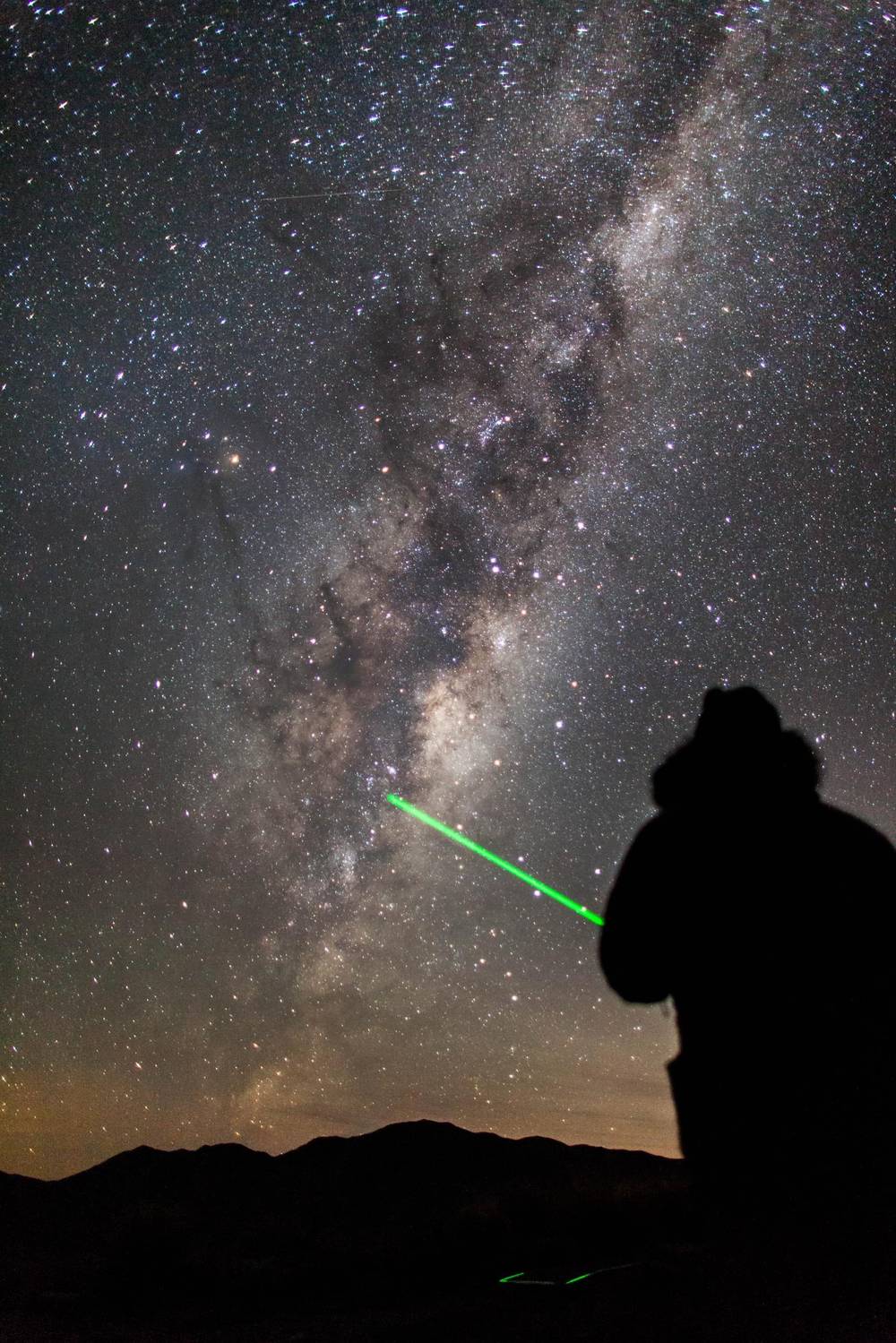
The second target is the Coal Sack. Against faint Milky Way starlight, the dark expanse of the Coal Sack Nebula lies just left of the cross.2 It is a dark hole that gives the band depth, and it is one of the easiest ways to make a southern picture look obviously southern. A tripod and a patient eye do most of the work.
Lake Tekapo photo ideas start with foreground, and foreground is what separates a snapshot from a keeper. The lakefront, the tussock slopes and the silhouette of the church all offer something for the sky to sit above, and a photo with a recognisable building is far more shareable than a field of stars on their own. Scout your frame in daylight if you can, because you will not see it in the dark.
Places compared
| Place | At night | The limit | Good for |
|---|---|---|---|
| Canal roads | Open to look from8 | Bring your own warmth8 | Reflections |
| Church exterior | Outside the gates6 | Gates close at dusk6 | Landmark in frame |
| Mount John road | Listed 9am to 4pm9 | $14 per vehicle10 | Day scouting |
| Summit night tour | Guided, 105 minutes | Age 10 and over | Observatory dome |
| Farm tour | Guided, 75 minutes | Groups of up to 10 | Dark ground, group photo |
The limits come from the church, the road operator and the tour listings; check them before you travel.
A modern phone in night mode can capture a surprising amount of the Milky Way on a clear, moonless night, as long as it is held still. Prop it on a wall, a bag or a small tripod, set the timer so your finger does not shake it, and do not touch it during the exposure. The result is not a professional image, but it is a picture you will be proud of.
A camera on a tripod does better. The usual approach is to open the lens as wide as it goes, raise the sensitivity until the sky looks bright on the screen, focus by hand on a bright star and keep the exposure short enough that the stars stay as points. Test shots and a zoomed-in preview are better teachers than any fixed set of numbers, because every lens and sensor behaves differently.
Do not expect your pictures to match what you see through a telescope. Objects seen through the telescope on a tour are generally black and white, according to one operator, and the color in a long exposure photograph comes from the camera collecting more light than your eye can.4 That is not a trick, just a difference between eyes and sensors, and it is one of the pleasures of the hobby.
How long you get under the sky
Listed durations, not time at the eyepiece; the indoor show has no outdoor stargazing.
If you join a tour, the light rule is clear. White lights, including flash photography and illuminated phones, are not allowed on any tour of one major operator.4 The reason is practical: a single bright screen resets the eyes of everyone nearby, and it takes a good while to get night vision back.
The sensible kit is a red torch and a phone in its darkest setting. Red light preserves night vision much better than white. Turn screen brightness down before you leave the hotel, switch off any flash, and tell your friends to do the same. Guides will remind you, but a group that comes prepared has a better night.
The Moon is the other rule of the dark. Brighter moonlight affects the visibility of fainter stars and galaxies, and the sky is darkest when there is no moon.3,11 Plan the faint-object shots, the Milky Way and the Coal Sack, for the days around a new moon, and keep the full-moon nights for the lake, the mountains and the church, which look wonderful in moonlight.
Match your kit
Choose the line closest to your situation, and the answer sits beside it
If I only have a phone
Shoot on a wall with the timer
The Milky Way and the cross share a skyscape for a phone to catch.1
If I have a tripod and a wide lens
Aim for the Coal Sack
It lies just left of the cross against the Milky Way.2
If It is a full moon week
Shoot the church and the lake
Brighter moonlight affects the visibility of fainter stars.3
If I want to be in the picture
Book the farm tour
A complimentary group photo arrives within 48 hours.
If I am a professional at the church
Apply for the permit first
Professionals must apply and pay a fee.12
Three ways to get the picture
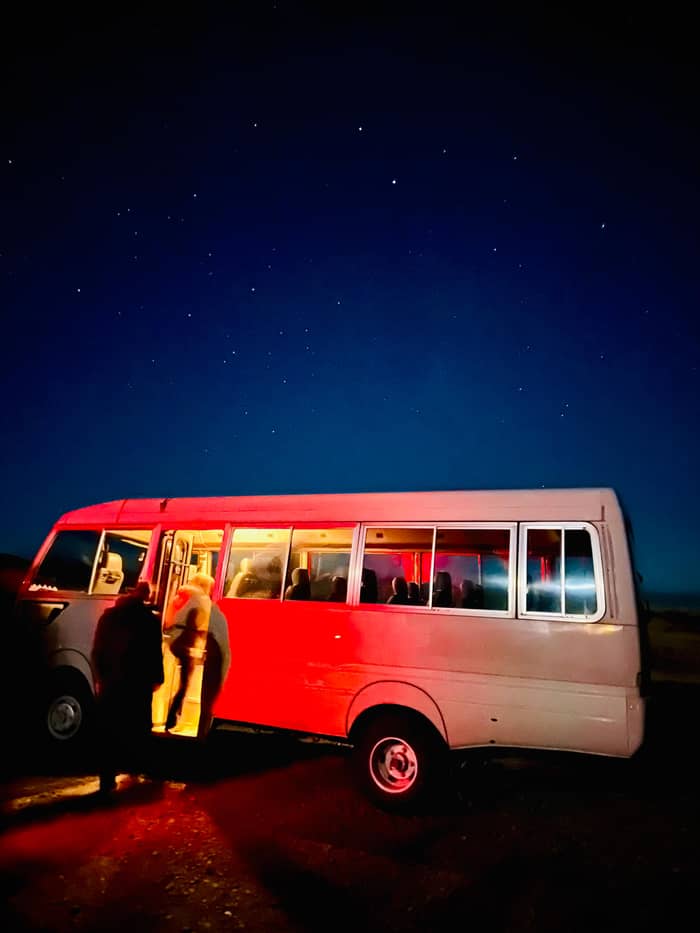
Lowest effort
Light and simple
See the tour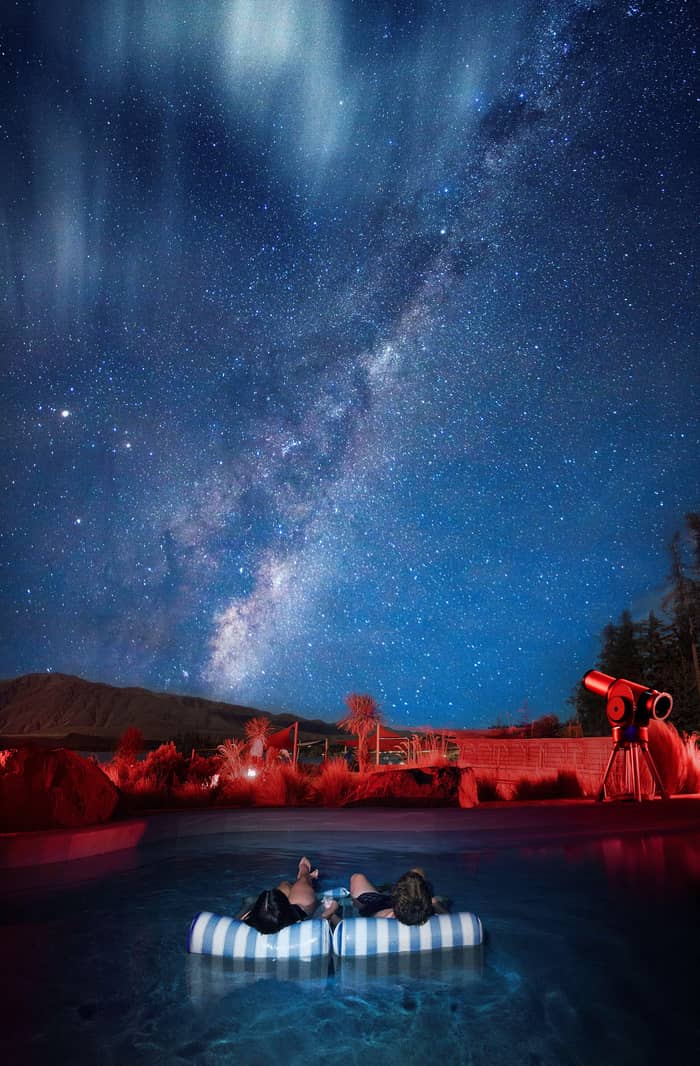
Most control
Sharper and bigger
See the tour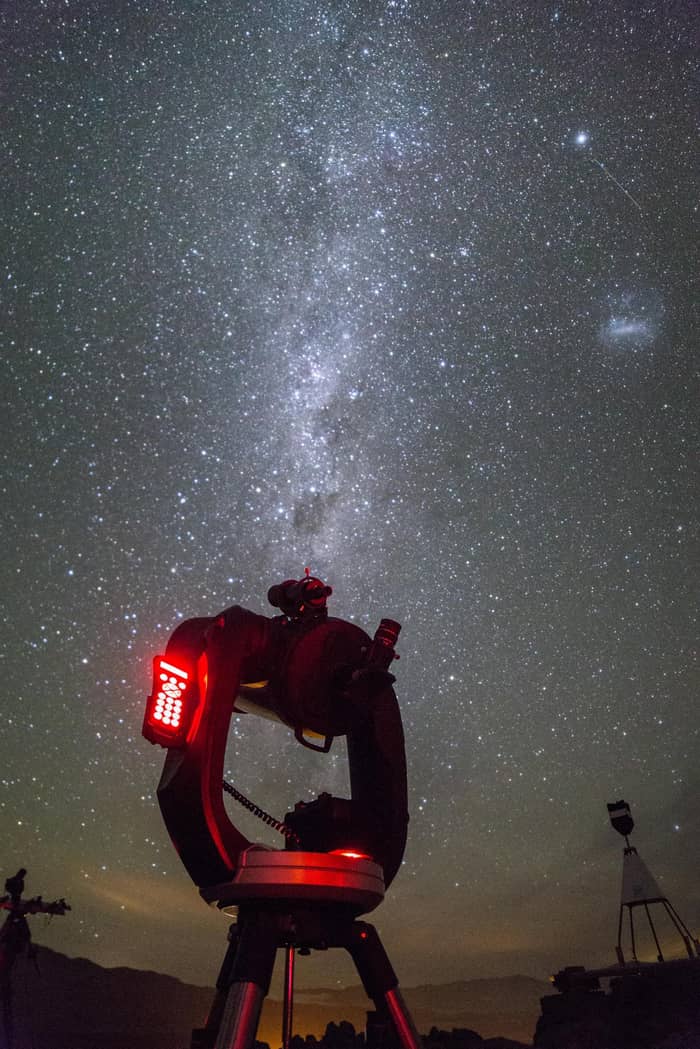
No kit needed
You are in the shot
The cheapest option is free. The regional tourism body suggests bringing blankets, folding chairs and a thermos to stargaze for free from the canal roads, where stars reflect in the water.8 That reflection is the reason photographers like the canals: the sky doubles in the water, and the shot needs no climb.
The church is the classic subject, but it has rules. The grounds close at dusk, which is 8pm in summer, so a night photograph is taken from outside the gates.6 Professionals must apply for a permit and pay a fee for shoots on the grounds, and no professional photos are permitted on Sundays.12,13 Do not climb the closed gates and fence for a better angle.14
Mount John is a daylight road. The access road is listed as open 9am to 4pm, so a self-driven sunset or night shoot at the summit is not what the listed hours describe.9 If you want the observatory in your frame at night, the summit tour is the supported way up, and it is priced from $129 per person. For a daytime scouting trip, Cowans Hill takes 1 to 2 hours.15
Price the night
Type your party size and compare four evenings side by side
Side-by-side: 4 options
Type your party size and compare four evenings side by side
≈
View≈
View≈
View≈
ViewFigures are GetYourGuide from-prices, translated at the ECB reference rate. The booking step shows what you pay exactly.
A shooting night
Days before
Brighter moonlight affects fainter stars and galaxies, so aim for the days near a new moon.3
Afternoon
Visit the canal road or the church in daylight; the church grounds close at dusk.6
Dusk
White lights, flash and illuminated phones are not allowed on one operator's tours.4
After dark
The southern Milky Way glows beside the Southern Cross; use the Coal Sack as an anchor.1,2
Late
Tekapo can get very cold after dark even in summer, so carry layers and spares.7
48 hours
This site's tour emails a group photo within 48 hours, weather permitting.
Quiet, dark hostels in Lake Tekapo for astrophotographers are worth the search, because a dark place to stay makes astrophotography far easier: you can step outside and shoot. The reserve invites businesses and private homes inside its boundary to apply for dark sky friendly certification, so ask your accommodation whether it has it.16 It is a reasonable question and a good guide to how the owners think about light.
The certification charter asks that exterior lights be off between 11pm and 5am, and ideally from 10pm to dawn, and that premises with interior light spill use blinds or curtains.17,18 Those habits are good news for a photographer. A quiet property that follows them gives you a dark yard and no security lamp in the frame.
The regional tourism body lists places to stay that range from luxury lodges to glass-covered stargazing pods, rustic cabins, hotels, bed and breakfasts and farmstays.19 We sell no accommodation here, so read each property's own page, and choose one that is easy to get back to after a cold night outside.
Video
The Cherranos on YouTube · Your tap on play is what loads the video.
the dark expanse of the Coal Sack Nebula lies just left of the cross
Cold is the practical enemy. The average daily low in July is -3.3 °C at the Tara Hills station about 73 km from Tekapo, and even a summer month such as January averages 9.4 °C.5,5 Dark Sky Project advises that Tekapo can get very cold after dark even in summer, and recommends warm layers, long trousers and closed shoes.7
Batteries drain faster in the cold, so carry spares in an inside pocket and bring a power bank for the phone. Condensation can fog a lens when you move from a warm room to a cold night, so give the gear a few minutes to settle before you shoot, and keep a soft cloth handy.
Finally, let someone else take some of the pictures. This site's tour includes a complimentary group photo taken under the stars, weather permitting, that arrives by email within 48 hours. It frees you to enjoy the sky, and it gives you at least one picture with you in it.
FAQ
Hold the phone still; the glow of the southern Milky Way sits beside the Southern Cross.1
Dark Sky Project says the sky is darkest when there is no moon.11
White lights, including flash and illuminated phones, are not allowed on one operator's tours.4
The grounds close at dusk, which is 8pm in summer, so shoot from outside.6
The regional body suggests bringing blankets and a thermos to the canal roads.8
A Private Property Use permit and a fee are required.12
The figure is from the Tara Hills station, 73 km away.5
It arrives by email within 48 hours.
Sources
Up next
Wondering which Tekapo night tour fits you? A real person answers here.