Dynamic chart
Stars at Lake Tekapo: the southern sky, object by object
Sky time by season
Twelve months of sunset and night
Choose a month to compare sunset, day length and the cold, then plan which sights to chase.
Sunset
Jan
The average daily low in January is 9.4 °C.10
Jun
Mid-June has 8.9 hours of sun, which leaves the longest night.10
Dec
Mid-December has 15.4 hours of sun, so the sky darkens late.10
Sunset is worked out for the 15th of each month on New Zealand time. Day length is for Lake Tekapo; temperatures come from the NOAA station at Tara Hills, 73 km away, 1991 to 2020.
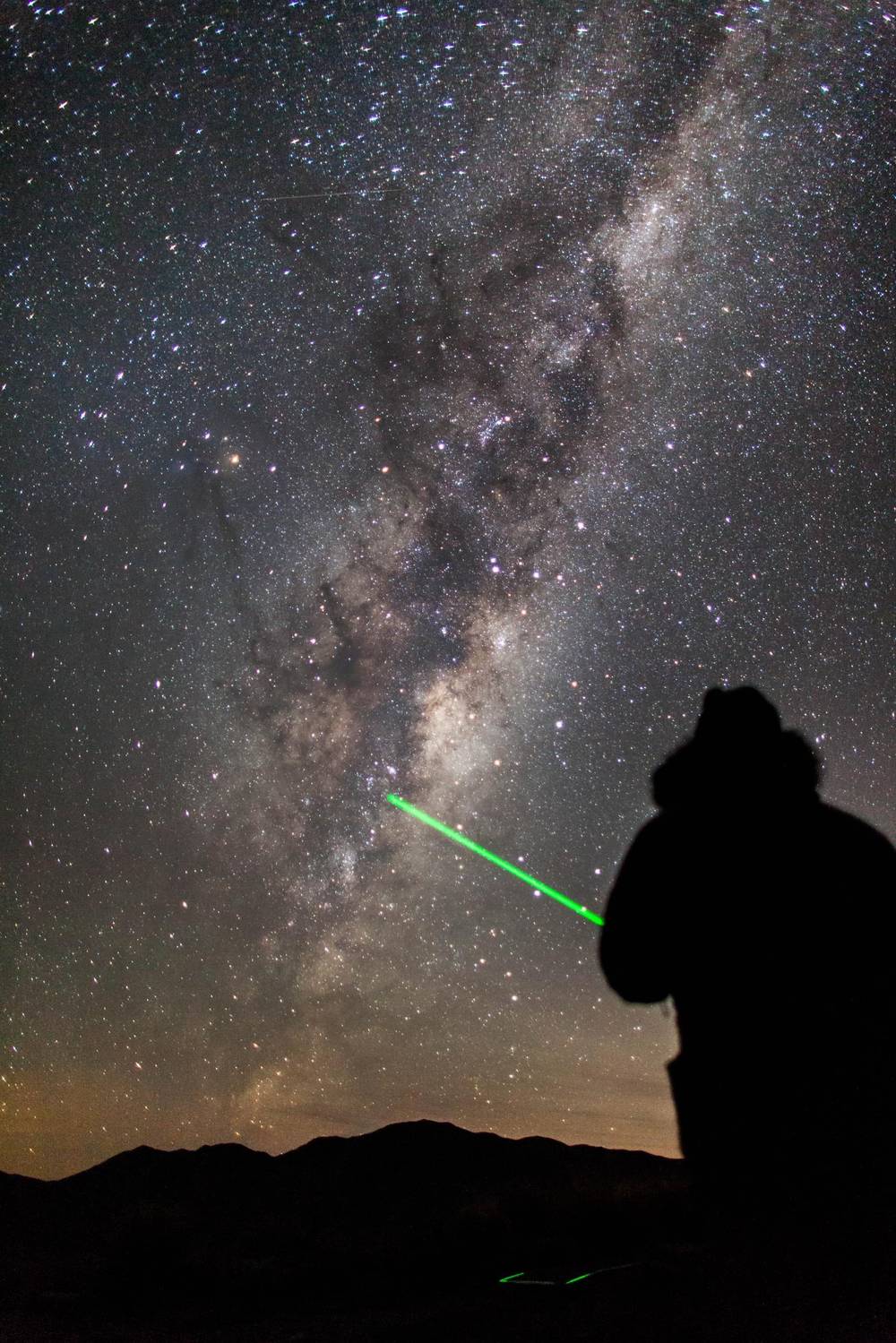
The Southern Cross, a dark cloud in the Milky Way and a pair of satellite galaxies all hang above the lake. This page names them and says how to find each one by eye.
Editorial team, laketekapostargazing.top · Updated November 6, 2026 · 6 min reading time
Summary view
- Southern CrossCrux is the smallest of the 88 constellations, and the Pointers lead you to it.1,2
- Milky WayThe southern Milky Way glows beside the cross, with the Coal Sack nearby.3,4
- Small CloudThe Small Magellanic Cloud is about 200,000 light-years away.5
- Large CloudThe Large Magellanic Cloud is about 163,000 light-years away.6
- Best viewBoth clouds can be seen by eye from a dark site.7,8
The Southern Cross and the Pointers that find it
The most famous shape in the southern sky is the Southern Cross, or Crux. It is the smallest of the 88 constellations officially recognised by the International Astronomical Union.1 Small is the right word: the cross covers a modest patch of sky, and first-timers often look straight past it because the stars around it are brighter than they expect.
That is where the Pointers help. Two bright nearby stars allow people to easily find the Southern Cross in the sky.2 They are Alpha and Beta Centauri, and they sit in a line that points roughly toward the cross. Once you spot that bright pair, follow the line and the cross appears. A guide with a handheld laser makes the move trivial, which is why the first part of a tour is usually a naked-eye lesson.
The cross is a handy signpost for the rest of the southern sky. You do not need to navigate by it in Tekapo, since the road signs do that job, but learning its shape makes the sky feel less random after a few minutes outside, and every other target on this page is easier to place once the cross is found.
What to find
Five sights, and the plain way to find each
| Sight | What it is | Size or distance | How to find it |
|---|---|---|---|
| Southern Cross | Constellation Crux1 | Smallest of 881 | Follow the Pointers2 |
| Coal Sack | Dark dust cloud4 | Left of the cross4 | Look near the cross4 |
| Milky Way glow | Our own galaxy3 | Beside the cross3 | Dark sky, no moon |
| Small Cloud | A small galaxy in Tucana9 | 200,000 light-years5 | Naked eye, dark site7 |
| Large Cloud | A satellite galaxy6 | 163,000 light-years6 | Unaided eye, dark site8 |
Distances are rounded figures from NASA and differ between sources; treat them as approximate.
The dark cloud and the glow around the cross
Beside the cross sits the Milky Way at Lake Tekapo, the southern band, and NASA describes the glow of the southern Milky Way and the well-known Southern Cross as sharing a single skyscape.3 From a dark site the band is not a faint smudge. It is textured, with bright clumps, thin lanes and gaps, and it takes up a large part of the sky overhead.
The most striking gap is the Coal Sack. Against faint Milky Way starlight, the dark expanse of the Coal Sack Nebula lies just left of the cross.4 It is a cloud of dust that blocks the light of stars behind it, so it shows up as a hole rather than a glow. Photographers love it because it gives the bright band a clear focal point.
Both features depend on real darkness. A bright moon, a streetlamp or a phone screen can dissolve the Coal Sack in a moment, which is why guides ask you to keep lights low and let your eyes adjust. Give the sky a good quarter of an hour in the dark and the band slowly gains depth, which is a pleasant effect and an easy one to miss if you keep checking messages.
The Magellanic Clouds, near and far
The Magellanic Clouds look like detached pieces of the Milky Way, and they are in fact small galaxies. NASA describes the Small Magellanic Cloud as a small galaxy about 200,000 light-years away, in the constellation Tucana, and visible to the naked eye in dark-sky conditions.5,9,7
Its larger neighbour is closer. NASA's picture notes that the Large Magellanic Cloud is about 163,000 light-years away, and that from a dark-sky location away from big cities you can see it with the unaided eye.6,8 Both distances are rounded figures; treat them as round numbers, not as surveyed addresses.
Spotting them is a small thrill that even casual viewers enjoy. They look like patches of cloud that refuse to move, and a cloud that stays still in a sky full of stars is a good clue. On a tour, a guide will point them out in seconds, and a telescope will start to resolve some of their brighter regions. Together, they make the southern sky unmistakable.
Match your hunt
What do you most want to see?
Pick the line closest to your wish, and the answer sits beside it
If I just want the famous cross
Find the Pointers first
Two bright nearby stars lead to the Southern Cross.2
If I want to see another galaxy
Look for the Clouds
The Small Cloud is visible to the naked eye in dark-sky conditions.7
If I want a photograph
Aim at the Coal Sack
It lies just left of the cross, against the Milky Way starlight.4
If I want long dark evenings
Go in June
At mid-June the sun is up for only 8.9 hours.10
If I want guided telescopes
Take the farm tour
The groups are capped at 10 with 14-inch telescopes.
When to look: seasons and the Moon
The sky changes with the seasons, and so does the length of the night. At mid-June the sun is above the horizon for 8.9 hours and at mid-December for 15.4 hours.10,10 Winter evenings therefore give you the most time under a dark sky, and summer evenings give you the least, so a tour in summer starts later.
The Moon matters more than almost anything else, and one operator lists moon phase among the conditions it checks before every tour.11 A bright moon lights the whole basin and washes out the faint band of the Milky Way and the Coal Sack, while a new moon leaves it all intact. Check a moon calendar when you plan your dates, and treat the days around a new moon as the best bet for the faint features on this page.
Which parts of the Milky Way are overhead depends on the hour as well as the season, so a guide or a sky app will tell you what is up on your night. Even in summer, with its short nights, the Southern Cross, the Pointers and the Magellanic Clouds are well placed in the southern sky for a late evening session.
Price the sky
What your evening costs
Type your party size and compare four evenings side by side
Side-by-side: 4 options
What your evening costs
Type your party size and compare four evenings side by side
- Alpine farm tourOur own pick · price per person from $70
≈
View - Mount John summitObservatory hill · price per person from $129
≈
View - Crater stargazingObservation craters · price per person from $76
≈
View - Indoor sky showAny weather · price per person from $35
≈
View
Figures are GetYourGuide from-prices, translated at the ECB reference rate. The booking step shows what you pay exactly.
A night of looking
From first light to the clouds of Magellan
Dusk
Let your eyes adjust
Keep lights low; the band of the Milky Way gains depth as your eyes settle into the dark.
First
Find the Pointers
Two bright nearby stars allow people to find the Southern Cross easily.2
Then
Trace the cross
Crux is the smallest of the 88 recognised constellations, so look for a compact kite.1
Next
Spot the Coal Sack
The dark Coal Sack Nebula lies just left of the cross.4
Later
Pick out the Small Cloud
The Small Magellanic Cloud, in Tucana, shows to the naked eye in dark-sky conditions.9,7
Last
Find the Large Cloud
With the unaided eye, a dark site shows the Large Cloud, about 163,000 light-years away.6,8
Aurora australis: honest expectations
The southern lights at Lake Tekapo can be seen when solar activity is high, and a clear southern horizon in the Mackenzie Basin is a good place to watch. No tour can promise them, and nobody can switch them on. Treat any green glow as a bonus, not as the reason to book.
A camera collects more light than your eye does, so a phone on night mode will often show color in the sky that looks faint or gray in person. That surprises many first-time watchers, and it is useful to know ahead of time: the sky does not have to look dramatic with the naked eye for your picture to come out well.
If you hope for the aurora, plan spare nights, keep an eye on the forecast on the day, and keep your phone charged and your layers on. If it does not show, you still have the cross, the Coal Sack and the Magellanic Clouds, which no forecast can cancel and which are there on every clear night.
Video
Finding your way by the stars: the Southern Cross
AlfieAesthetics on YouTube · Your tap on play is what loads the video.
These two bright nearby stars allow people to easily find the Southern Cross in the sky.
Before you look up
A short kit list for the sky
Skills and checks3
- A moon calendar; new moon is the dark week
- A spare evening in case of cloud
- Time for your eyes to adjust
Carry with you3
- Warm layers; July lows average -3.3 °C10
- A red torch, not a white one
- A sky app to name what you see
What a guided evening adds
On this site's tour, groups are capped at 10 people and the telescopes are 14-inch instruments, so each guest gets real time at the eyepiece. The guide is live, in English or Japanese, and the tour lasts 75 minutes in total. It is rated 4.6 from 800 reviews and starts from $70 per person.
The summit tour on Mount John goes up to the 1,029-metre summit and begins with the naked-eye sky before moving to telescopes and the observatory dome. It is rated 4.6 from 275 reviews and starts from $129. Either evening covers everything on this page in some form.
The sky is clearest in the cooler months, and the sky is at its darkest when there is no moon, according to the operator's own advice.12 Moonlight also matters, since brighter moonlight affects the visibility of fainter stars and galaxies.11 The best way to use the page is as a pre-trip warm-up. Read the names, look at the table and the timeline, and then go outside knowing what you want to find. A guide will always show you the highlights, but a guest who arrives with a short list gets more out of the night.
FAQ
Fast, clear answers, short.
How do you find the Southern Cross?
Two bright nearby stars, the Pointers, allow people to easily find the Southern Cross.2
Is the Southern Cross a big constellation?
Crux is the smallest of the 88 recognised constellations.1
What is the dark patch next to the cross?
It lies just left of the cross against faint Milky Way starlight.4
Can you see the Magellanic Clouds by eye?
How far away is the Large Magellanic Cloud?
Does the Milky Way show at Tekapo?
The southern Milky Way and the Southern Cross share a skyscape.3
Will I see the southern lights?
Treat them as a bonus; the cross and the clouds are there on every clear night.
Do tours show these objects?
The farm tour uses 14-inch telescopes in a group capped at 10.
Sources
- European Southern Observatory · Navigating the stars ↩
- European Southern Observatory · Navigating the stars ↩
- NASA · Astronomy Picture of the Day: the Milky Way near the Southern Cross ↩
- NASA · Astronomy Picture of the Day: the Milky Way near the Southern Cross ↩
- NASA · WISE's view of a wispy cloud ↩
- NASA · Astronomy Picture of the Day: the Large Magellanic Cloud ↩
- NASA · WISE's view of a wispy cloud ↩
- NASA · Astronomy Picture of the Day: the Large Magellanic Cloud ↩
- NASA · WISE's view of a wispy cloud ↩
- NOAA · Global Summary of the Month, Station Tara Hills, temperatures only (GHCN NZ000937470), 1991 to 2020 ↩
- Dark Sky Project (operator official site) · Weather ↩
- Dark Sky Project (operator official site) · FAQs ↩
Up next